Amazon FBA Fees Japan 2026: Seller Cost Guide
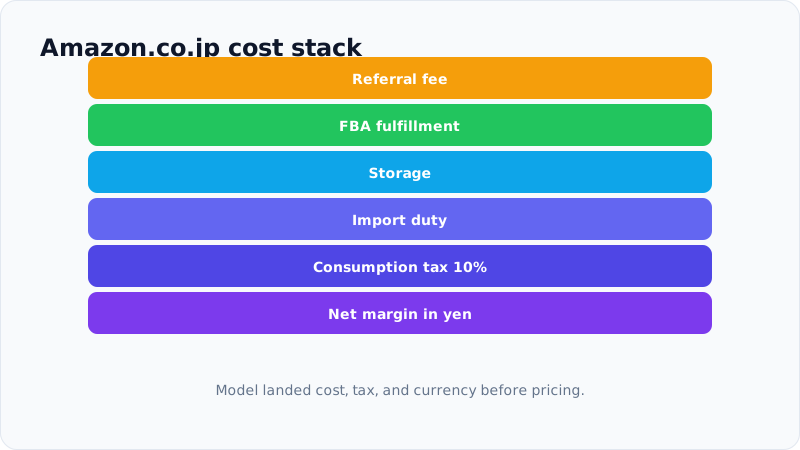
Amazon.co.jp pricing has its own fee stack: marketplace fees, FBA costs, import duty, consumption tax, and yen-denominated margin pressure.

Amazon Japan seller fees include more than referral and FBA fulfillment. Amazon.co.jp adds MFN import duty and 10% consumption tax on top of referral fees, fulfillment, and storage, while yen pricing can move margin if your product cost is in another currency. Use the live Amazon FBA calculator for current fee logic and /resources for official rate sources before you price.
The Amazon.co.jp fee stack
| Cost | What it is | Notes |
|---|---|---|
| Referral fee | Amazon's category-based selling fee | Referral fees vary by category and current Amazon.co.jp policy. |
| FBA fulfillment | Amazon handling, packing, shipping, and delivery | Fulfillment is priced by product size, weight, and program rules. |
| Storage | Inventory storage in Amazon fulfillment centers | Storage cost depends on inventory profile and timing. |
| Import duty | MFN duty due when goods enter Japan | Varies by product classification, origin, and customs treatment. |
| Consumption tax | Japan's national consumption tax | Japan's consumption tax rate is 10%. |
Consumption tax (10%)
Japan's consumption tax rate is 10%. For sellers, the important point is not just the rate but where it appears in your pricing, reporting, and cash-flow cycle. Treat registration, collection, invoices, and filing as country-specific compliance questions, and talk with a qualified tax advisor before relying on a simple margin worksheet.
Import duty into Japan
Import duty into Japan varies by product type and classification. That means landed cost can be materially different between SKUs even when the factory cost and retail price look similar. Before you compare products, map the HS code, origin, freight, duty, and import handling into one landed-cost view.
How Japan differs from the US/EU
- Yen pricing matters when product cost, freight, or ads are paid in another currency.
- Consumption tax is a country-specific compliance and cash-flow item, not just a margin percentage.
- Import duty into Japan follows product classification rules that can differ from US or EU assumptions.
- Customer expectations for delivery speed and marketplace presentation can affect whether FBA's conversion lift is worth the cost.
Do you need an Amazon Japan consultant?
Plenty of sellers look for Amazon FBA Japan consulting before entering the market, and for some of it that's the right call — a local partner genuinely helps with Japanese-language listings, importer-of-record and customs paperwork, JCT registration, and returns handling inside Japan.
But the first question consultants get asked is usually the one you can answer yourself in a few minutes: does this product actually make money in Japan? That's arithmetic, not advice — referral, fulfillment, storage, duty, and 10% consumption tax against your yen price. Model it first, and you'll know whether the market is worth paying anyone to enter.
Run your Japan numbers
Run your own Japan numbers before buying inventory. Open the free FBA profit calculator, model your yen sale price, product cost, duty, consumption tax, fulfillment, storage, ads, and returns, then check the official rate sources behind the current inputs.